
If you’re nervous about exercise during or post-tx, what can the EP help with?
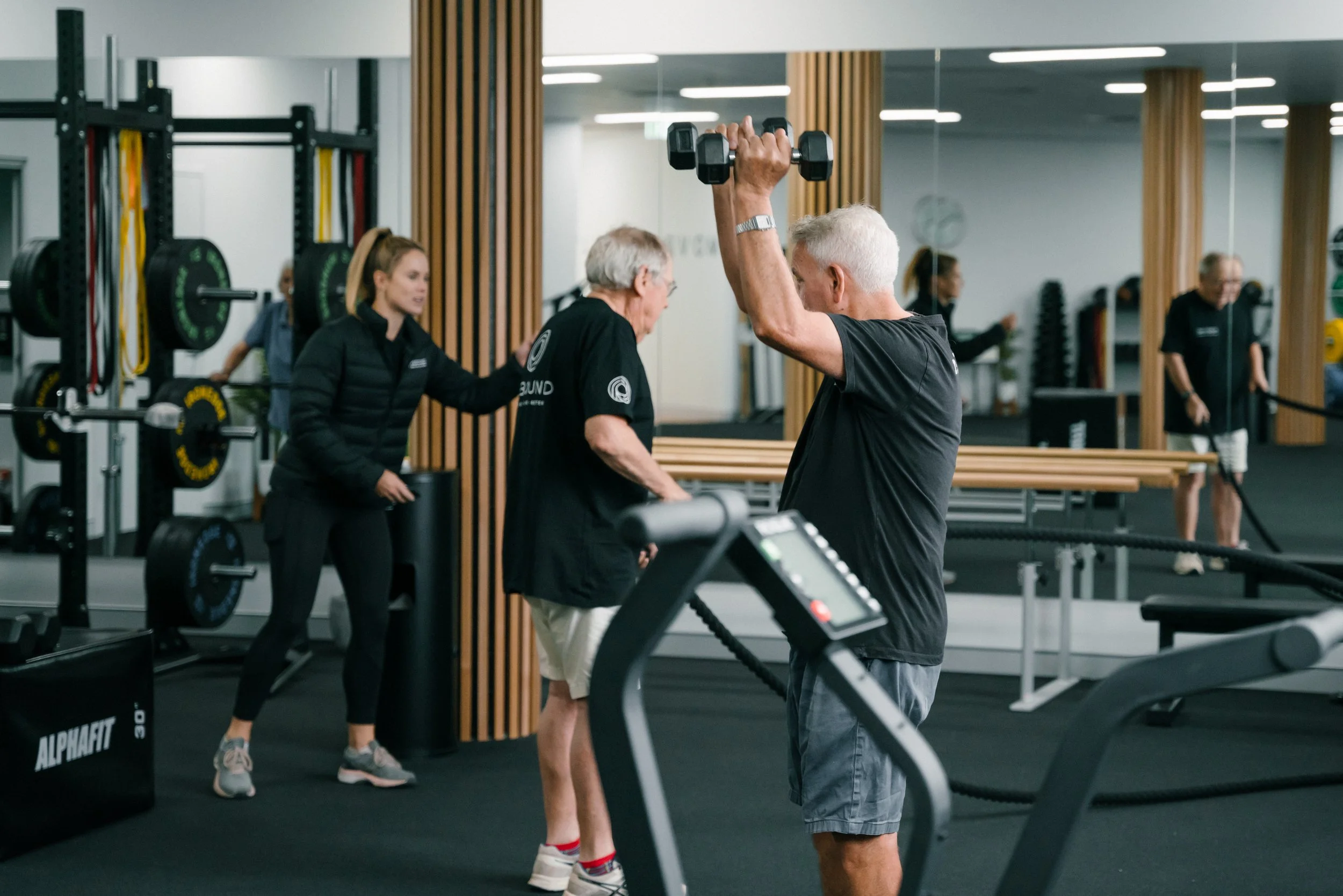
After a cancer diagnosis it is especially important to prioritize your health. Investing your time into healthy lifestyle choices can not only help you feel better, but research indicates diet and exercise have the potential to improve the efficacy of your cancer treatment, improve physical function and improve quality of life.
Evidence shows that exercise can reduce cancer treatment-related side-effects, improve quality of life and is associated with a reduced risk of developing a new cancer or other health conditions such as osteoporosis or diabetes. Epidemiological findings also indicate exercise may reduce the risk of cancer recurrence and reduce
cancer-specific and all-cause mortality. While research on the role of exercise in cancer survival is ongoing, it is evident that there are many physical, functional and psychological benefits of exercise for people with cancer pre-, during- or post-treatment (Cormie et. al. 2018, Hayes, et. al. 2019).
Exercise has been proven to be safe for those living with cancer when care is taken and professional exercise advice is adhered to. The Clinical Oncology Society of Australia recommends that exercise be a standard component of cancer care, and that best practice is when this is done under the guidance of an Exercise Physiologist or Physiotherapist with experience in exercise for people with cancer (Cormie et. al. 2018).
An Exercise Physiologist can help you to begin your cancer exercise journey pre, during and post treatment regardless of your current physical capacity. Whenever you feel ready to engage in exercise, in the modality of your choice an EP can help provide guidance on how, what, when, where and how often is a safe recommendation for you.
We understand you may have some concerns you may have about getting back into the gym so to make the first steps a little easier we’ve outlined what to expect on a first visit to Rebound.

Initial assessment
This is a private assessment with the Exercise Physiologist of your choice to discuss your goals and health concerns as well as conducting any assessment and answering your questions. A large part of this initial assessment will be a conversation with the Exercise Physiologist, discussing your medical history, previous & current exercise experience and what you would like to get out of your Exercise Physiology sessions.
The assessments performed in the initial consultation are individualized, and allow the Exercise Physiologist to decide what exercise prescription will suit you best.

These often include measures such as blood pressure, a balance assessment, a function assessment (this relates to functional activities e.g. sit and stand out of a chair), a strength assessment and/or attempting different equipment in the clinic to see what suits you best. If there is not time to perform many assessments in the initial consultation, they can be done at your next follow-up visit.
As part of your assessment, we will be completing a Management Plan with you. This is an important part of the process where we will outline what we are hoping to achieve together, work out a schedule and enable you to take this to all your other specialist and health appointments to share with them what we will be doing together.
What to bring to your initial assessment
We recommend wearing clothes you feel comfortable moving in, as you will likely be performing some movement in this session as part of your initial assessments. As well as a towel and drink bottle. If you have any letters from other health professionals you would like to bring in, you are welcome to do so.
Common questions
-
Yes! In your initial assessment your health professional will gain an understanding of your current capacity and tailor treatment to you. It does not matter what level of fitness you present with initially, everyone coming into Rebound is working towards their own goals. If you are nervous about commencing exercise our first win will be ensuring you feel confident in the gym and with your trainer.
-
Yes, again these will be addressed in the initial assessment. If any additional issues arise or you are concerned about anything during or after a session our duty of care extends beyond your appointment time. We are here to ensure you are safe while exercising throughout your cancer journey.
-
This is expected and it is ok. We will do our best to work with you to find times in your treatment cycles that you are more likely to feel energized and willing to exercise. If you are not feeling 100% but still wanting to attend a session ensure you let your practitioner know so they can tailor the session to your capacity on the day. We often find that doing something, even if it’s not as much as you usually can or would like to do, is better than nothing and will improve your sleep and energy levels later in the day.
-
Yes! We place a large emphasis on building a healthy client-practitioner relationship so that you can come into the clinic feeling confident that your needs and concerns are understood and hopefully have a lot of fun too!
-
If this is something you are interested in we think this is a great goal! We always begin with a one-to-one initial assessment for safety and generally clients will opt to do a few private sessions to get used to the gym and how their bodies are responding to exercise. If you and your health practitioner agree that joining a group class is a good option for you, groups are a fun way to exercise and feel motivated by others. At Rebound we offer the option of purchasing group classes in packs (ie, use as you go) which allows you the flexibility to attend group classes when you are feeling well and give your body the rest it needs if you are experiencing any treatment/post-treatment side effects.
If you are interested, please see the links below to view position stands on exercise in cancer care by the Clinical Oncology Society of Australia and Exercise and Sports Science Australia (ESSA).
Clinical Oncology Society of Australia
https://www.cosa.org.au/media/332757/cosa-position-statement-v3-dec2020-web-final.pdf
Exercise and Sports Science Australia
https://www.sciencedirect.com/science/article/pii/S1440244018312702